Will the Houthis join Iran s war
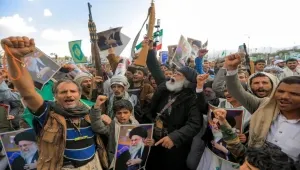
The United States-Israeli military strike against Iran on February 28, 2026, was not merely another episode in the region’s long cycle of tensions. That attack quickly transformed into a pivotal event with the announcement of the assassination of Iranian Supreme Leader Ali Khamenei, a development that disrupted the balance of power within the regional axis Tehran had built over decades.
In Yemen specifically, a different question arose: how will Abdel-Malik al-Houthi deal with this moment? Will these developments push the group to engage in a new confrontation, or will it choose to manage the situation cautiously and wait for the conflict’s trajectory to become clear?
And what will be the fate of the group and its leadership if it decides to wage this war?
In Sanaa, where the Houthi group is politically and ideologically linked to the Iranian axis, it was natural for attention to turn to the speeches of the group’s leader.
Abdel-Malik al-Houthi has appeared three times since the outbreak of the war. In his first speech, he declared his solidarity with Iran and affirmed his readiness for “all developments,” in a message that seemed more like a political statement than a declaration of military resolve. In the second speech, the tone was more emotional, offering condolences for Khamenei’s death and reaffirming support for Tehran.
The third speech was similar, without any different pronouncements, and reinforced the same message.
However, what was left unsaid in the speeches was as striking as what was said.
The group did not issue a clear declaration of military intervention, as it had done in the past when it wanted to send messages of deterrence or practical solidarity with its allies. Nor were there any direct escalations or clear military threats against Israeli or US interests recorded on the ground. Even the group’s
ارسال الخبر الى: