Are Yemen s Houthis Proxies or Partners of Tehran Understanding Their Military Posture Between Gaza and Iran
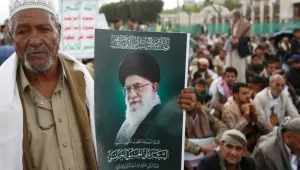
In recent days, a wave of analyses from both international and Arab media—as well as research centers—has examined the position of Yemen’s Houthi movement in the ongoing war between Iran on one side and Israel and the United States on the other, including Iran’s attacks on Gulf states.
Numerous interpretations have emerged, yet most converge on a common conclusion: that the Houthis are neither traditional Iranian proxies nor fully subordinate actors like Tehran-aligned factions in Iraq and Lebanon. Instead, they are often portrayed as possessing independent decision-making and unwilling to risk full engagement alongside Iran in the current war.
Some analysts have gone further, suggesting the Houthis function as partners rather than subordinates—actors with their own interests that may even diverge from Tehran’s priorities. This perspective is frequently used to explain their delayed involvement compared to groups like Hezbollah or Iraqi militias.
However, such interpretations represent a flawed and superficial reading of the Houthi movement. They reflect a limited understanding of the group’s ideological foundations, doctrinal framework, behavioral patterns, governing philosophy, and the trajectory it has followed since seizing power and administering territory in Yemen.
A Localized Extension of the Iranian Model
Reality and accumulated evidence indicate that the Houthi movement is, in essence, a localized version of Iran’s system—adapted to Yemen’s environment. Its roots, ideological formation, and organizational structure are deeply influenced by Iran. The movement mirrors Tehran’s revolutionary model, absorbs its sectarian and ideological culture, and follows a similar strategic path.
This assertion requires little proof. Organizationally, the Houthis resemble Iran’s hierarchical system, beginning with the concept of a supreme leader—embodied in Abdulmalik al-Houthi—along with similar operational methods, ideological frameworks, revolutionary conduct, governance patterns, and political messaging. Their internal and external policies often align closely with Tehran’s, reflecting a high degree of integration across multiple domains.
In Sana’a
ارسال الخبر الى: